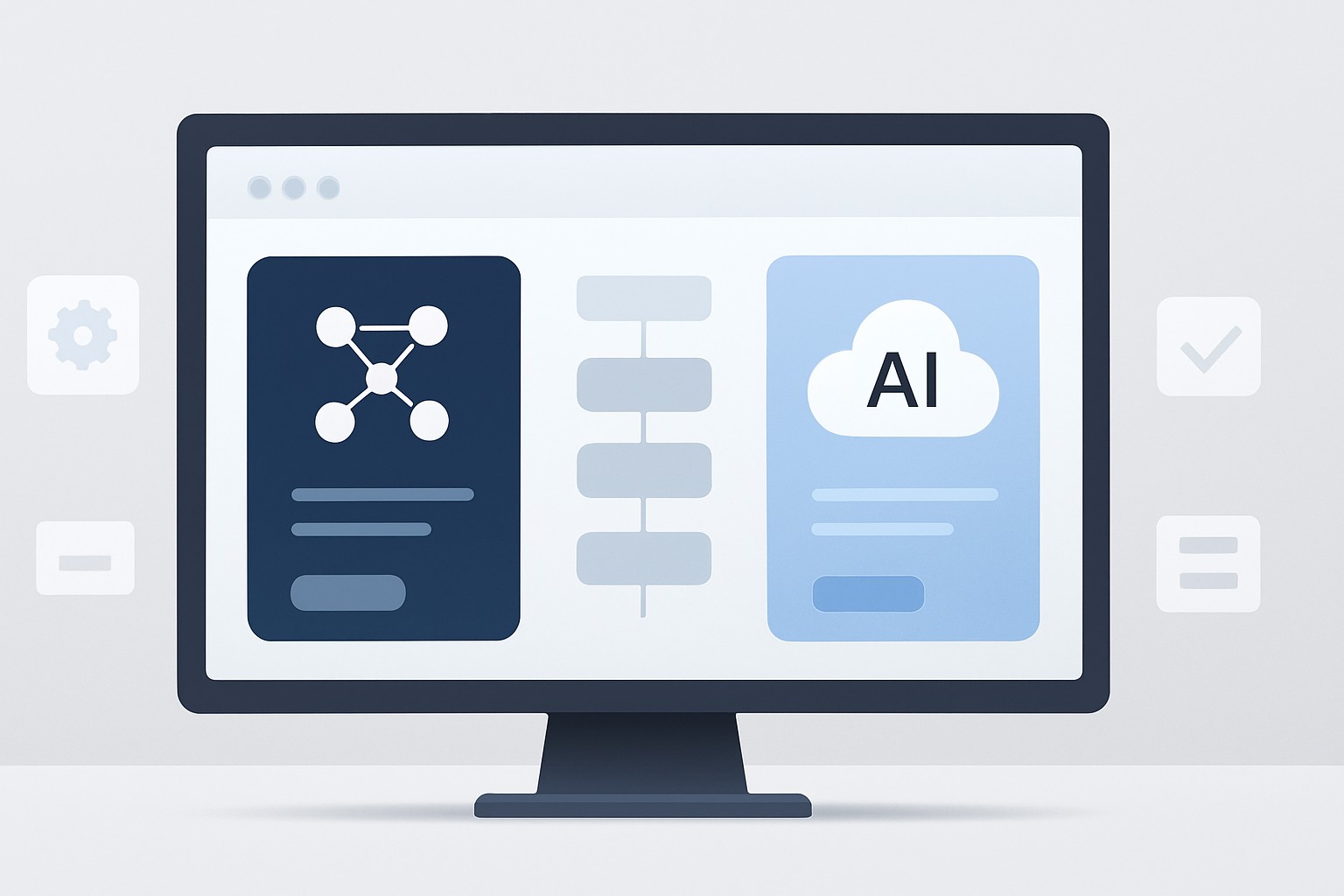
Enterprises in India are increasingly exploring AI-driven automation to streamline operations and improve productivity. A critical decision businesses face is whether to deploy AI capabilities through cloud-based services or build local AI pipelines within their own infrastructure. Both approaches have distinct advantages and challenges, and understanding these can shape smarter investments and implementation strategies.
Why AI Automation Matters for Indian Enterprises
Automation powered by AI can reduce manual tasks, speed up decision-making, and improve accuracy in areas such as customer support, document processing, and operational workflows. Indian businesses—from manufacturing to education—are adopting AI to stay competitive and compliant with evolving regulatory needs, including data privacy and security mandates.
Cloud AI Services: Convenience at a Cost
Cloud AI platforms offer ready-to-use models, scalability, and constant updates without significant upfront infrastructure investment. Enterprises can integrate features like chatbots, image recognition, and natural language processing quickly.
However, these benefits come with recurring costs based on usage, data transfer, and API calls. For large-scale or continuous AI workloads, such fees accumulate rapidly, impacting operational budgets. Moreover, transmitting sensitive business data to third-party cloud providers raises concerns around data sovereignty, compliance with India’s IT rules, and potential exposure risks.
Local AI Pipelines: Control and Customization
Building AI pipelines that run on-premise or within a private cloud can address these concerns. Local AI models—often implemented with open-source frameworks—allow enterprises full control over their data and AI processing environment.
This approach eliminates ongoing API fees and reduces latency, enabling faster processing of high-volume tasks such as automated media production, intelligent document parsing, or secure internal chat agents trained on proprietary knowledge bases.
From a technology perspective, local pipelines require investment in hardware and skilled development resources. Enterprises must architect solutions using technologies like C# (.NET Core), Node.js, or Python to embed these AI capabilities seamlessly into their business applications.
Key Considerations for Choosing Between Local and Cloud AI
- Cost Structure: Cloud AI is operational expense-heavy; local AI demands upfront capital but reduces long-term fees.
- Data Security & Compliance: Sensitive data benefits from local AI’s data isolation, aligning with India’s regulatory environment.
- Scalability: Cloud AI scales effortlessly; local AI pipelines require capacity planning and scaling strategies.
- Expertise: Local AI needs in-house or trusted partners experienced in open-source AI frameworks and enterprise integration.
- Performance: On-premise AI reduces latency and dependency on internet connectivity, critical for real-time applications.
Implementation Advice for Indian Enterprises
Organizations considering AI integration should start by mapping business workflows that can benefit most from automation. Evaluate current IT infrastructure and in-house AI expertise. For enterprises with stringent data control needs or high-volume processing demands, investing in local AI pipelines can offer superior cost control and security.
Partnering with experienced technology vendors who specialize in 100% open-source local AI integrations can ease development challenges. These partners help build custom AI pipelines that embed directly into existing software ecosystems, ensuring seamless workflow automation without recurring API costs.
FAQ: What Is a Local AI Pipeline?
A local AI pipeline is an AI system deployed within an organization's own IT environment, processing data and running AI models on local servers or private clouds, rather than relying on external cloud AI services. This setup improves data privacy, reduces costs over time, and offers more customization options.
Indian enterprises planning AI-driven workflow automation can review local AI pipeline options to balance cost, security, and performance effectively.
If your organization is evaluating AI automation projects, consulting with providers skilled in local AI pipeline development and enterprise integration can help determine the optimal approach aligned with your business goals.